PPF Surface Preparation: Why It Makes or Breaks the Install
Most PPF problems people blame on the film are actually prep problems. Bubbles, edge lift, peeling, and locked-in defects almost always trace back to what happened before the film went on.
PPF installation looks like a film-and-squeegee job. It isn't. Most of the work happens before any film touches the car. Whether your PPF lasts five years or fails in five months depends on how the surface was prepared. This guide shows you what proper PPF surface preparation involves, what goes wrong when it's skipped, and how to tell if your installer is doing it right.
Key Takeaways
- Most PPF failures trace back to prep work, not the film itself.
- Skipping prep traps contaminants and defects under the film for years.
- Proper prep includes a thorough wash, decontamination, claying, and paint correction.
- Paint condition matters. PPF won't fix it and won't hide it.
- Judge an installer by how they prep, not how fast they finish.
Why does PPF surface preparation matter?
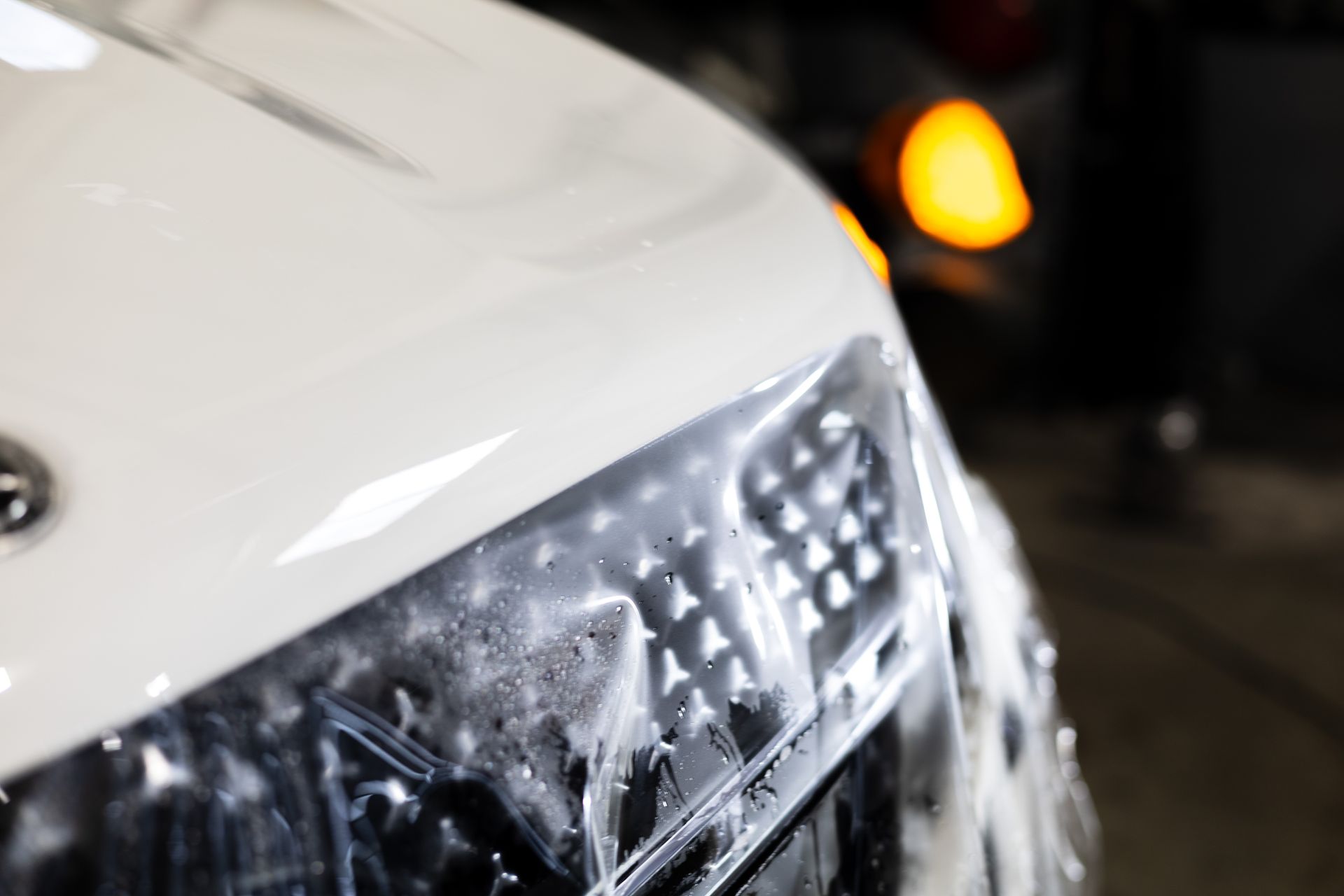
PPF surface preparation matters because the film bonds to whatever it's applied over. If the surface has contaminants, oxidation, or swirl marks, those get sealed under the film for years. Proper prep removes them first, which lets the film adhere evenly, stay clear, and last its full lifespan.
PPF doesn't sit on top of your paint like wax. The adhesive on the back of the film grips the clear coat directly, which is what gives it the durability to stay in place for years. That bond is only as good as the surface it forms on. You can buy the best film on the market and still end up with bubbles and lifting within a year if the prep was rushed.
What happens when you skip PPF prep?
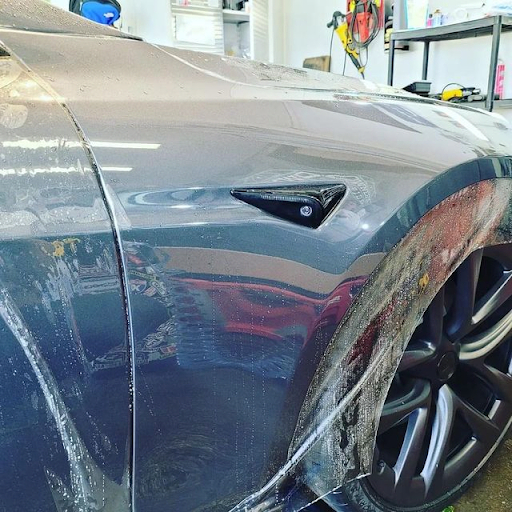
When prep is skipped, contaminants get trapped under the film and create bubbles, dirt specks, and weak adhesion points. Edges lift early. Swirl marks and oxidation become permanently visible through the film. Premature peeling and discoloration follow within months instead of years.
What you see on day one
The damage shows up immediately on close inspection:
- Dirt specks and dust particles trapped under the film
- Small air bubbles that don't squeegee out
- Visible swirl marks magnified by the clear film
- Hazy areas where the film didn't bond evenly
- Edges that don't sit flush against the panel
These aren't installation mistakes. They're prep mistakes that show up at installation.
What shows up months later
Other consequences take longer to appear, which is why they often get blamed on the film:
- Edge lift around bumpers, mirrors, and door handles
- Peeling that starts at the corners and spreads inward
- Yellowing or discoloration over poorly cleaned areas
- Adhesion failure after the first few washes
Anything left on the surface is also sealed in for the life of the install. Fixing it means removing the film and reinstalling, which doubles the cost and labor.
What does proper PPF surface preparation involve?
Proper PPF surface preparation involves a thorough hand wash, chemical and mechanical decontamination, claying, paint correction where needed, and a final solvent wipe-down. Each step removes something the next step can't.
- Thorough hand wash. A safe hand wash with pH-neutral shampoo removes loose dirt and road grime. It also lets the installer see the true condition of the paint.
- Chemical decontamination. Iron and tar removers dissolve bonded contaminants that won't come off with soap and water, pulling out brake dust and road tar embedded in the clear coat.
- Clay treatment. A clay bar pulls bonded contaminants out of the paint mechanically. Anything left after chemical decontamination comes off here.
- Paint correction where needed. If the paint has swirl marks, light scratches, or oxidation, machine polishing removes them. This is the step that decides whether defects stay visible under the film for years.
- Final solvent wipe-down. A clean wipe with isopropyl alcohol removes polishing oils and residue. The surface has to be chemically clean for the adhesive to bond.
- Surface inspection under proper lighting. Bright, angled lighting catches anything missed in earlier steps. A good installer checks every panel before any film is unrolled.
Skip any of these and the rest become less effective.
How does the condition of your paint affect PPF installation?
Paint condition decides what prep is needed. Light swirling and oxidation can be corrected before the film goes on. Deep scratches, clear coat failure, and exposed metal are bigger problems. PPF won't hide them. Failing clear coat needs bodywork first, because the film won't fix what's already breaking down.
If your paint has fine swirl marks, light oxidation, or shallow scratches, paint correction handles it. A few hours of machine polishing brings the paint back to a clean surface that's ready for film.
Some issues are beyond what prep can fix. Clear coat that's peeling or flaking, rust, exposed metal, and deep scratches all need bodywork before any film is applied. PPF doesn't hide scratches either. It's a clear film that magnifies what's underneath, not a cover-up.
How long should PPF surface preparation take?
Proper prep takes most of the install time, often more than the film application itself. Partial front coverage prep alone can take several hours. Full-car prep stretches across one to two days, especially when paint correction is needed. If an installer promises same-day full-car PPF, ask how they're shortening the prep.
A full-car PPF job done in a few hours almost always means prep was skipped. Watch for these red flags:
- Same-day full-car installation with no inspection beforehand
- No mention of decontamination or claying in the quote
- No paint correction offered, even on older paint
- A workspace that isn't dust-controlled or properly lit
- An installer who can't explain their prep process
How can you tell if your installer is doing the prep right?
Ask how they prep, not how fast they finish. A proper installer will explain their decontamination, claying, and correction steps without hesitation. Look for a clean, dust-controlled workspace, good lighting, and a willingness to show you the paint before the film goes on.
What to ask before booking
- How do you decontaminate the paint before installation?
- Do you include paint correction, and how is it priced?
- How long will the install take?
- Can I see the prep work before the film goes on?
What to inspect after the work is done
Before you drive away, take a few minutes to check the work in good light:
- Look across each panel for trapped dust, bubbles, or specks
- Check edges, corners, and door jambs for clean wrapping
- Inspect for any visible defects under the film
- Ask about cure time and what to avoid in the first week
A good installer welcomes this inspection. A rushed one doesn't.
What PPF can and cannot do
PPF is a strong protection product, but it has clear limits. Knowing them before installation sets the right expectations.
What PPF does:
- Protects against rock chips and road debris
- Protects against UV damage
- Resists stains and yellowing on quality films
- Reduces fading and discoloration from environmental exposure
- Can be applied to specific panels or the full car
What PPF does not do:
- Fully protect against every kind of damage
- Make the surface 100% scratch-proof
- Last forever, since films eventually need replacement
- Stay fully invisible, since edges and corners can be visible
- Self-heal on every type of film, since not all films have this feature
Proper prep doesn't change these limits. It just makes sure the film performs at its full capability within them.
Post-installation care that protects your prep work
After installation, the film needs time to cure. Avoid washing the car for several days, and keep it away from rain and dust where possible. Minor water bubbles often appear during curing and clear up on their own.
- Wait at least 5 to 7 days before washing the car.
- Hand wash with a pH-neutral shampoo and a clean microfiber mitt.
- Skip automatic and brush car washes, which can lift edges over time.
- Avoid harsh chemicals and abrasive cloths.
- Inspect the edges every few months for any early signs of lifting.
The bottom line
Proper PPF surface preparation is the foundation of every good installation. The film you choose matters less than the work that happens before it goes on. Ask your installer how they prep, watch how they handle your car, and inspect the work in good lighting before you drive away. Want to know if your paint is ready for PPF?
Book a consultation so a professional installer can inspect your paint and walk you through the prep process before any film is applied.
Frequently Asked Questions
Why is surface preparation important before PPF installation?
Surface preparation removes contaminants, oxidation, and swirl marks that would otherwise be sealed under the film for its full lifespan. It also ensures the adhesive bonds evenly, which prevents bubbles, edge lift, and premature peeling. Without proper prep, even the best film will fail early.
Can PPF be applied over swirl marks?
It can be, but it shouldn't. PPF doesn't hide existing defects. It often makes them more visible because the clear film amplifies what's underneath. Light swirl marks should be corrected through paint correction before the film goes on.
Do you need paint correction before PPF?
It depends on your paint. If there are swirl marks, light scratches, or oxidation, yes. If the paint is in showroom condition, light decontamination may be enough. A good installer will inspect the paint and tell you what's needed before quoting the work.
Can you install PPF over a ceramic coating?
No. PPF needs to bond directly to the clear coat. Any existing ceramic coating, wax, or sealant has to be removed first through polishing or chemical stripping. Installing PPF over a coating leads to weak adhesion and early failure.